
Concrete Poured Flat, Level, and Built to Stay That Way
Concrete patios in Austin for residential properties pairing outdoor slabs with deck work, landscaping updates, or standalone patio installations
Established Austin homes on varied lot sizes and topographies present a specific challenge for concrete patio work: grade changes, tree root proximity, and existing landscape infrastructure all affect how a slab is formed and poured. Relentless Construction and Remodeling installs concrete patios for residential properties throughout Austin, handling every phase from site preparation to surface finishing so that the finished slab integrates with the existing lot conditions rather than fighting them. Homes in Central Austin and East Austin with mature landscaping and irregular lot shapes frequently require forming decisions that account for grade differences across a patio footprint—something that only becomes visible once the site is excavated and evaluated.
The installation sequence begins with site preparation: clearing and grading the area, setting forms to the correct elevation, and confirming drainage direction before any concrete is poured. Relentless Construction and Remodeling schedules patio pours to avoid conflicts when the same property also has deck or landscape work in progress, so concrete finishing is not interrupted or compromised by other trades working adjacent to the form area. Standard thickness and reinforcement are included in every pour; decorative finishes or custom surface colors are discussed during the estimate phase so those decisions are made before work begins rather than during the pour.
Request an on-site estimate with Relentless Construction and Remodeling to review the lot grade, existing landscape features, and preferred slab configuration before forming begins.
What Proper Concrete Patio Installation Requires
Concrete patio work that holds its shape and surface over time depends on decisions made before the first cubic yard is poured. Sub-base preparation—how the ground beneath the slab is graded, compacted, and stabilized—determines whether the finished surface remains level or develops low spots and cracking as the base settles unevenly beneath it. On established Austin residential lots where mature trees are nearby, root systems and disturbed soil zones near the home's foundation affect how the sub-base needs to be prepared and whether additional reinforcement is warranted for a specific area of the slab.
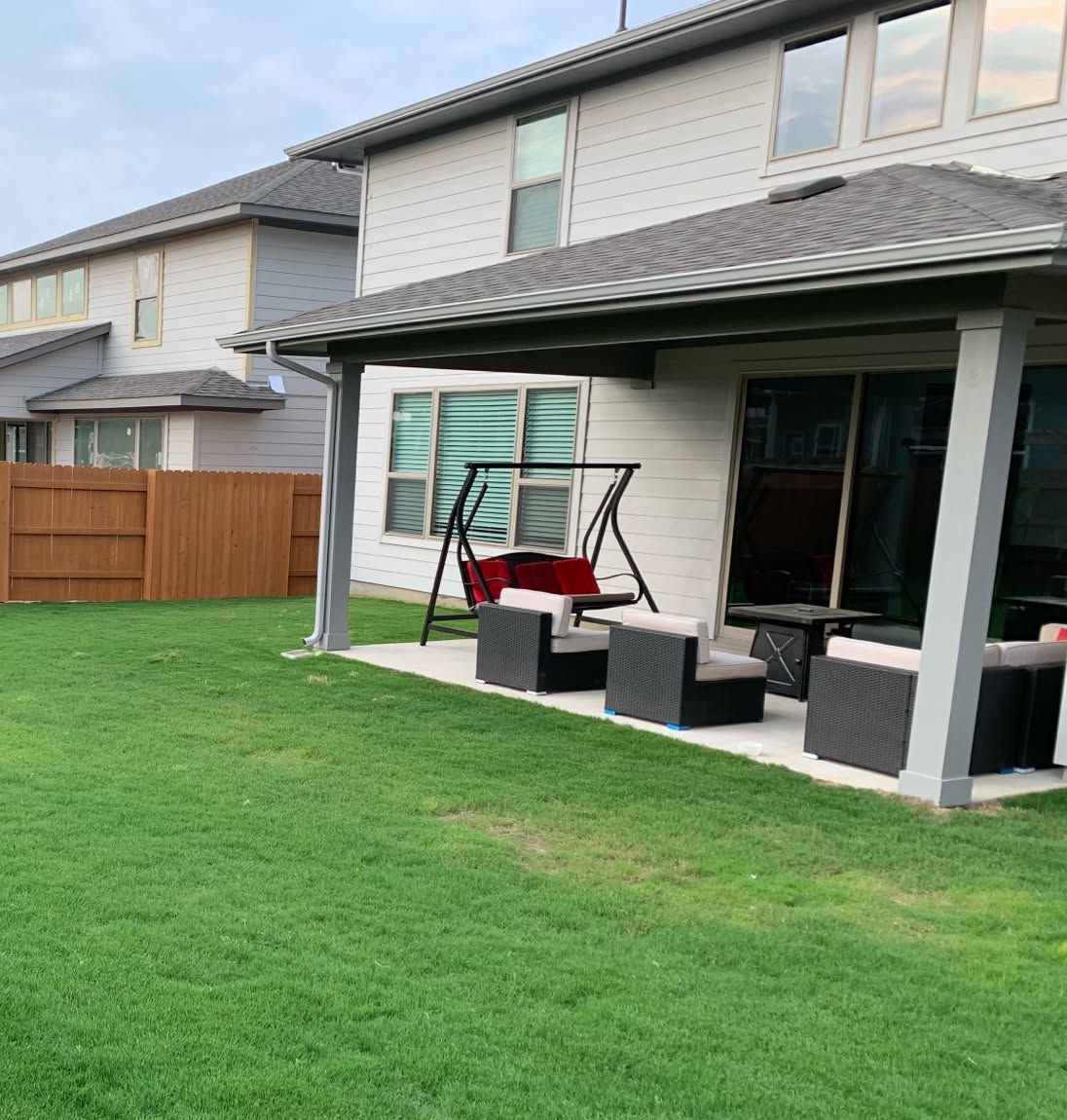
Once the slab cures and forms are removed, the surface is visually clean and structurally stable—a flat, finished area that can be used immediately for outdoor furniture, grilling setups, or as a transition surface between a deck and the yard below. What owners notice at this point is how the slab integrates with the surrounding grade: properly formed concrete drains water away from the structure and the yard without pooling on the surface or directing runoff toward the home's foundation.
Relentless Construction and Remodeling offers patio installation as part of broader outdoor
construction services, which means patio work can be coordinated directly with deck installations or other exterior projects on the same property. Decorative surface options—exposed aggregate, broomed finishes, or integral color—are available and are confirmed during the estimate so that material selections are in place before any work begins.
Common Questions About Concrete Patio Installation
These questions cover the practical aspects of how concrete patios are formed, poured, and finished on residential properties, including how lot conditions and adjacent work affect the process.
What site preparation happens before the concrete is poured?
The area is cleared, excavated to the appropriate depth, and graded to establish a stable, compacted sub-base. Forms are then set to the correct elevation and checked for level before any concrete is placed—this step directly determines whether the finished slab drains correctly and resists settling.
How does an existing deck or landscaping affect where and how the patio is formed?
Adjacent structures and landscape elements establish boundaries and elevation constraints that the slab must match. Work scheduling is coordinated so that the concrete pour does not compete with deck framing or landscape grading happening on the same lot, which protects the finish surface from foot traffic and debris during the cure period.
What thickness and reinforcement are standard for a residential concrete patio?
A four-inch slab with wire mesh or rebar reinforcement is standard for most residential patio applications. Factors like expected load, lot conditions, and proximity to tree root zones can warrant additional thickness or reinforcement, which is determined during site evaluation before forming begins.
How long does concrete need to cure before the surface can be used?
Foot traffic is generally safe after 24 to 48 hours, but full structural strength develops over 28 days. Heavy outdoor furniture or planters are better placed after several days, and any surface sealers or decorative coatings require the concrete to reach a specific cure threshold before application.
What does a correctly finished concrete patio look like once forms are removed?
The surface should be uniform in color and texture, free of major cracking or voids, and pitched slightly away from the home or any adjacent structure to direct water away. In Central Austin and East Austin where lot grades vary, confirming drainage direction during the forming stage is how this outcome is controlled rather than corrected after the fact.
Relentless Construction and Remodeling also installs concrete patios in Buda, Kyle, and West Lake Hills. To discuss your lot configuration, coordinate patio work with an existing deck project, or confirm surface finish options, call Relentless Construction and Remodeling at (512) 659-5050.