
Built Right Before the First Board Goes Down
Deck and porch construction in Austin for homes with deteriorating ledger boards, failed flashing, or structurally compromised connections to the house frame
Rotted ledger boards are one of the most consistently mishandled problems in residential deck work. Homeowners often see surface-level deterioration and assume a partial repair will hold, but when the ledger board—the structural member that anchors the deck to the house—has failed at its connection point, covering it over creates a load-bearing hazard rather than a fix. Relentless Construction and Remodeling addresses this correctly by removing the damaged board and flashing entirely before any new framing begins, and that sequencing matters because the ledger connection carries the lateral load of the entire deck platform.
On arrival, the crew inspects the existing ledger board and flashing condition first. If rot has compromised the connection, that section is removed, the underlying framing is evaluated, and both the ledger board and flashing are replaced with new pressure-treated lumber and properly installed flashing before deck framing proceeds. This is a common situation in Central Austin and South Austin, where residential properties built in earlier decades often have original deck attachments that predate current ledger flashing standards—meaning water has had years to work behind the connection point before it becomes visibly obvious from above.
Arrange an on-site inspection to assess your existing ledger board and determine whether your deck project requires structural replacement before new framing begins.
How Ledger Work Changes What Gets Built
The sequence Relentless Construction and Remodeling follows is deliberate: ledger board and flashing evaluation comes before any material is ordered or framing starts. If the existing ledger is sound, the crew proceeds directly with new deck framing and finishing. If it has deteriorated, the replacement happens first—with new pressure-treated lumber sized to match the load requirements of the planned deck—and only then does the framing phase begin. This prevents the common failure pattern where a new deck is installed over a compromised connection and begins pulling away from the house within a few years.
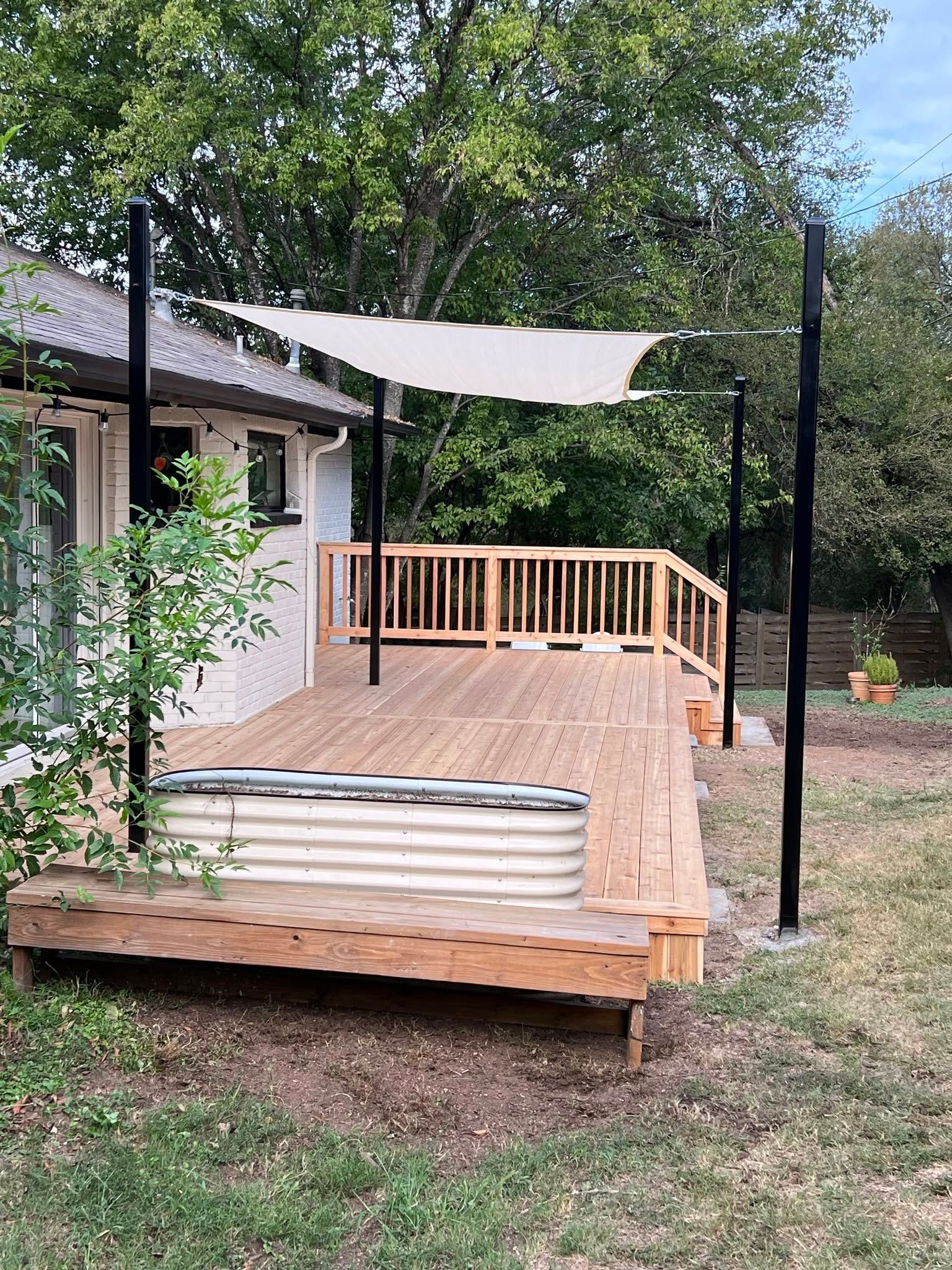
Once framing and decking are complete, the owner personally walks the job on the final day to confirm all work is finished to standard before sign-off. What you notice at that point is a deck that sits level, connects cleanly to the house, and shows no gaps or movement at the ledger joint—observable details that reflect whether the structural work underneath was done correctly. Flashing should be visible as a continuous barrier behind the ledger, not tucked or missing at any point along the connection.
Deck and porch projects vary based on size, existing structural conditions, and finish preferences. Cedar, composite, and pressure-treated lumber each perform differently over time, and the right choice depends on how the deck will be used, how much direct sun it receives, and what maintenance the homeowner is willing to do long-term—factors worth discussing before materials are selected.
What Property Owners Ask About the Work
The questions below address how deck and porch construction is actually performed, what decisions get made on site, and what separates a properly built structure from one that deteriorates ahead of schedule.
What does a ledger board replacement actually involve, and why does it matter?
The ledger board is the horizontal member bolted to the house rim joist that carries the deck's weight and transfers lateral loads back to the structure. When it rots or fails—often from inadequate flashing that lets water sit behind it—the entire deck connection is compromised, and no amount of surface work fixes that; the board and flashing must both be removed and replaced with new pressure-treated lumber and properly integrated flashing.
How does the crew determine whether repair or full replacement is the right approach?
The inspection on arrival looks at the ledger board itself, the condition of the flashing behind it, and the rim joist it connects to. If rot has penetrated the ledger or the rim joist, a patch is not structurally sound, and full replacement is the correct call regardless of what the deck surface looks like from above.
What happens during the final walkthrough before the project is closed out?
The owner walks the completed job to check that ledger connections are secure, flashing is continuous, decking is properly fastened, and all finish work is complete—this step exists because it is easier to address any detail while the crew is still on site than to schedule a return visit afterward.
Why do older Austin properties so often have ledger problems compared to newer construction?
Homes built before modern ledger flashing details became standard were often attached with a ledger set directly against the house sheathing with minimal waterproofing. Water migrates behind the board at the bolt holes and along the top edge, and over years this saturates the lumber in a location that rarely dries out, making rot essentially inevitable without the right flashing detail in place from the start.
What should finished deck framing look like when the structural work is done correctly?
Joists should be set at consistent spacing, hangers should be properly fastened at each connection, the ledger should sit flush and square against the house, and blocking should be installed where the structure requires it—these are the details a knowledgeable homeowner can observe before decking boards go down and the framing is covered.
Relentless Construction and Remodeling builds
decks and porches for Austin properties where the work starts with understanding the existing structure, not assuming it is sound. Relentless Construction and Remodeling also builds decks and porches in Buda, Kyle, and West Lake Hills. Request an evaluation so the inspection and scope are established before any work begins.